Hormuz Under Siege: Iran's Escalating Naval Assertions and Global Repercussions
Iran has dramatically escalated tensions in the Strait of Hormuz by seizing two ships, a move that follows closely on the heels of a US decision to call off retaliatory strikes. This latest act underscores Tehran's resolve to exert control over the vital global oil chokepoint and sends a stark message to the international community. The incident raises urgent questions about maritime security, the future of US-Iran relations, and the potential for broader regional conflict, with global economic stability hanging in the balance.
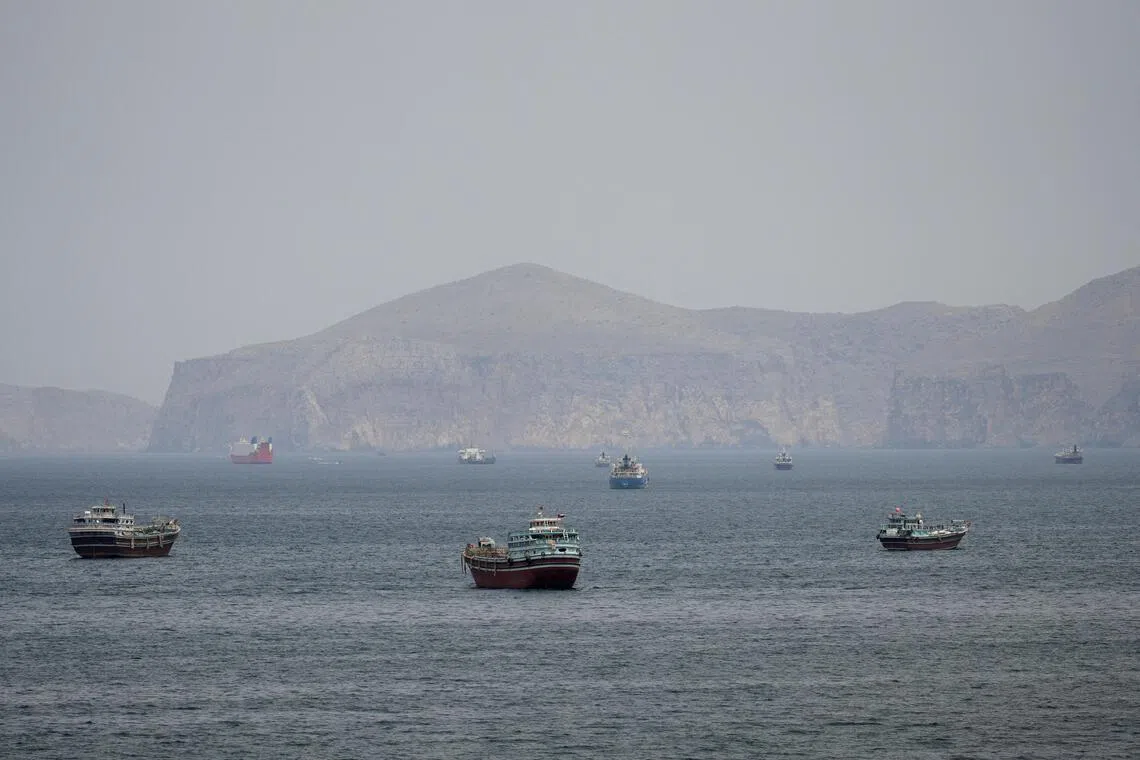
The strategic Strait of Hormuz, a narrow yet indispensable artery for global oil shipments, has once again become the epicenter of escalating geopolitical tensions. In a bold and defiant move, Iran seized two commercial vessels on April 22, sending shockwaves through international shipping lanes and diplomatic circles. This aggressive act comes hot on the heels of a decision by US President Donald Trump to abort planned military strikes against Iran, signaling a dangerous new phase in the long-standing standoff between Washington and Tehran. The incident not only highlights Iran's determination to assert its influence over this critical chokepoint but also underscores the precarious balance of power in a region already fraught with instability.
A Chokepoint of Global Significance
The Strait of Hormuz, connecting the Persian Gulf to the Arabian Sea, is arguably the world's most important oil transit chokepoint. Approximately one-fifth of the world's total petroleum consumption and one-third of all seaborne traded oil passes through this 21-mile-wide passage daily. For major global economies, particularly in Asia and Europe, the uninterrupted flow of oil through Hormuz is non-negotiable. Any disruption, whether due to military conflict, piracy, or political brinkmanship, sends immediate tremors through global energy markets, leading to price spikes and economic uncertainty. Iran, with its extensive coastline along the Strait, has long viewed this waterway as both a strategic asset and a potential leverage point against international pressure. Its Revolutionary Guard Corps (IRGC) maintains a significant naval presence, capable of interfering with shipping at will, as demonstrated by these recent seizures.
Historically, the Strait has been a flashpoint. During the 1980-88 Iran-Iraq War, both sides attacked oil tankers, leading to US naval intervention to protect shipping. More recently, incidents involving limpet mines on tankers and the downing of a US drone have kept the world on edge. The current seizures are not isolated events but rather the latest manifestations of a pattern of behavior designed to project power and signal defiance in the face of crippling economic sanctions imposed by the US following its withdrawal from the Joint Comprehensive Plan of Action (JCPOA), commonly known as the Iran nuclear deal.
The Context of Escalation: Sanctions and Standoff
To understand the current crisis, one must look back at the unraveling of the JCPOA. In May 2018, the Trump administration unilaterally withdrew from the multilateral agreement, arguing it was insufficient to curb Iran's nuclear ambitions and malign regional activities. This withdrawal was followed by the re-imposition and tightening of **
Stay Informed
Get the world's most important stories delivered to your inbox.
No spam, unsubscribe anytime.
Comments
No comments yet. Be the first to share your thoughts!