Humpback Super-Groups: A Chaotic Comeback for Ocean's Gentle Giants
In a breathtaking display of marine recovery, humpback whales are forming unprecedented 'super-groups,' a phenomenon recently captured by photographers documenting over 300 individuals in a single day. This remarkable resurgence, driven by conservation efforts and abundant food sources, signals a profound shift in whale behavior and ecological health. While a cause for celebration, scientists are now racing to understand the implications of these massive gatherings for the species' future and the broader marine ecosystem. The 'chaos' of these super-groups offers a complex narrative of hope and new challenges.
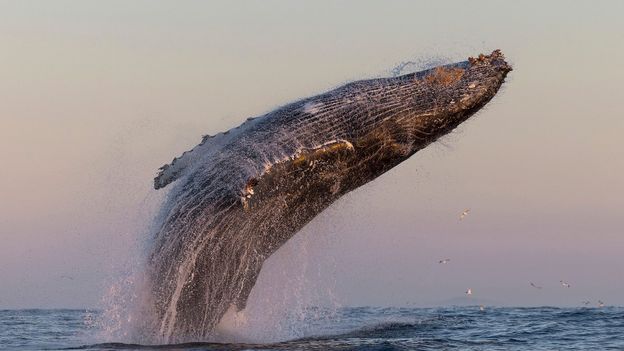
On a misty morning in December 2025, two dedicated photographers bore witness to an extraordinary spectacle that sent ripples of excitement through the marine biology community: 304 individual humpback whales, congregating in a single, awe-inspiring formation. This unprecedented gathering, the highest number of large whales ever identified in one day, wasn't just a fleeting moment of beauty; it was a powerful testament to a species' remarkable return from the brink of extinction. For decades, the majestic humpback, once decimated by industrial whaling, was a symbol of environmental tragedy. Now, these 'super-groups' — massive aggregations of dozens, sometimes hundreds, of whales — are painting a new picture of hope, albeit one that scientists are still scrambling to fully comprehend.
The Echoes of a Vanished Era: Whaling's Legacy
The story of the humpback whale's recovery is inextricably linked to the dark chapter of commercial whaling. From the 18th century through the mid-20th century, these gentle giants, prized for their oil and baleen, were hunted relentlessly. It's estimated that over 90% of some humpback populations were wiped out, pushing the species to the very precipice of oblivion. The sheer scale of the slaughter is almost unfathomable today. The International Whaling Commission (IWC) moratorium on commercial whaling in 1986, following decades of advocacy and scientific warnings, marked a crucial turning point. This global agreement, though not universally adhered to, provided a much-needed reprieve, allowing surviving populations to slowly begin the arduous journey of recovery. The sight of 304 whales together is a direct, vibrant consequence of that pivotal decision, a living monument to successful conservation.
The Rise of the Super-Groups: A New Phenomenon
For centuries, humpbacks were primarily observed in smaller groups, typically individuals or mothers with calves, or loose feeding aggregations. The emergence of 'super-groups' — defined as gatherings of 20 or more individuals — is a relatively recent phenomenon, first widely documented in the early 2010s off the coast of South Africa. These aren't just random clusters; they are often dense, coordinated assemblies, sometimes involving hundreds of whales engaging in synchronized feeding behaviors. The December 2025 sighting, with its record-breaking count, underscores that this isn't an anomaly but a growing trend. Scientists theorize that the primary driver behind these massive congregations is an abundance of food, particularly krill and small schooling fish, in specific, nutrient-rich areas. As whale populations rebound, competition for resources might also play a role, pushing them to exploit dense food patches more efficiently through cooperative feeding strategies.
Dr. Eleanor Vance, a leading marine mammalogist at the Ocean Conservation Institute, notes, "We're seeing a behavioral shift that speaks volumes about the health of the ecosystem. For a species to form such large groups, it requires two things: a sufficient population size and a super-abundance of food. It's a double-edged sword of success; while thrilling, it also presents new questions about resource sustainability and potential disease transmission within these dense aggregations." The 'chaos' described by observers refers to the sheer number of massive bodies moving, breaching, and feeding in close proximity, a dynamic spectacle unlike anything seen in modern times.
Ecological Implications and Future Challenges
The formation of super-groups carries significant ecological implications. On one hand, it signifies a robust and thriving population, a testament to the ocean's capacity for recovery when given a chance. Humpbacks, as apex predators, play a crucial role in marine ecosystems, helping to cycle nutrients through the water column and influencing the distribution of their prey. Their increased numbers could lead to healthier ocean environments overall. On the other hand, such dense aggregations could also present new vulnerabilities. Increased competition for food, heightened risk of disease transmission, and potential for more frequent entanglements with fishing gear or ship strikes are all concerns that scientists are actively investigating. "When you have hundreds of massive animals in one place, the dynamics change," explains Dr. Vance. "We need to understand if these super-groups are sustainable long-term, and what impact they have on localized food sources. It's a complex puzzle."
Furthermore, the sheer biomass represented by these super-groups demands an equivalent biomass of prey. This raises questions about the long-term stability of krill and fish populations, especially in the face of climate change, which is altering ocean currents and temperatures, impacting marine food webs. The phenomenon also highlights the need for adaptive conservation strategies, moving beyond simply protecting individual whales to managing entire ecosystems that can support these burgeoning populations.
Technology and the Future of Whale Research
The ability to accurately count and study these super-groups relies heavily on advancements in technology. The photographers' images, captured with high-resolution cameras and likely aided by drones or sophisticated tracking equipment, were instrumental in confirming the record number. Beyond photography, acoustic monitoring, satellite tagging, and even AI-driven image analysis are becoming indispensable tools for marine biologists. These technologies allow researchers to track movements, understand communication patterns, and assess the health of individual whales within these vast gatherings without causing disturbance. The December 2025 sighting serves as a powerful reminder that human observation, coupled with cutting-edge technology, remains vital for understanding our planet's most magnificent creatures. As these super-groups continue to emerge, the confluence of human curiosity and technological innovation will be key to unraveling their mysteries and ensuring the long-term survival of humpback whales.
A Cautious Optimism for Ocean's Future
The sight of 304 humpback whales in a single day is more than just a remarkable photograph; it's a powerful narrative of hope and resilience. It demonstrates that with concerted global effort, species can indeed recover from the brink of human-induced extinction. However, this success story is not without its complexities. The 'chaos' of the super-groups is a vibrant, living testament to a changing ocean, one that demands continued vigilance, scientific inquiry, and adaptive conservation strategies. As these gentle giants reclaim their rightful place in the marine ecosystem, humanity's role shifts from protection to understanding and responsible stewardship. The future of the humpback, and indeed the health of our oceans, depends on our ability to embrace this new era of abundance with wisdom and foresight.
Stay Informed
Get the world's most important stories delivered to your inbox.
No spam, unsubscribe anytime.
Comments
No comments yet. Be the first to share your thoughts!