Northern Ambitions: Israeli Settlers Eye South Lebanon Amidst Conflict
As conflict between Israel and Hezbollah escalates, displacing over a million Lebanese, a fringe but vocal segment of Israel's settler movement is openly advocating for the expansion of Israeli borders into southern Lebanon. This audacious proposition, rooted in religious and historical claims, mirrors the West Bank settlement ideology and poses significant geopolitical risks. Experts warn that such aspirations could irrevocably destabilize an already volatile region, threatening to ignite a broader, more devastating conflict.
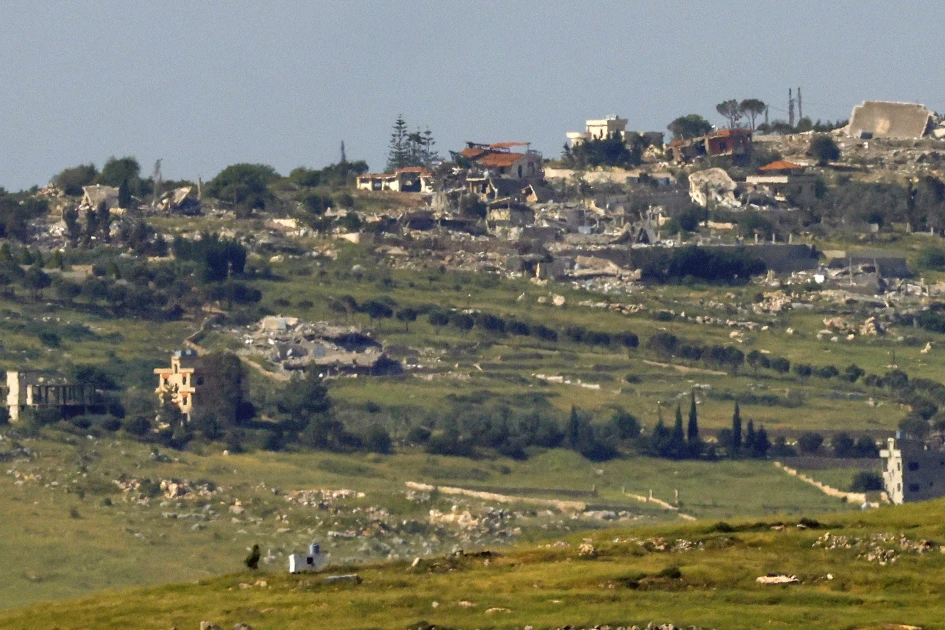
From her home in an Israeli settlement nestled deep within the occupied West Bank, Anna Sloutskin harbors a vision that extends far beyond the Green Line. She yearns to see her country's borders expand northward, one day encompassing and settling southern Lebanon. This audacious ambition, once confined to the fringes of Israeli society, is gaining traction among a small but increasingly vocal segment of the settler movement, fueled by the ongoing conflict between Israel and Hezbollah. Their gaze northward is not merely a hypothetical musing; it represents a profound and dangerous ideological current that could irrevocably reshape the geopolitical landscape of the Middle East.
The current hostilities, which have tragically displaced over a million Lebanese citizens from their homes in the south, have inadvertently created a perceived vacuum, which some hardline Israeli groups view as an opportunity. The idea of settling southern Lebanon, a region historically and culturally distinct, is not new, but its resurgence now, amidst active conflict, underscores a worrying trend of maximalist territorial claims. This article delves into the motivations behind this controversial movement, its historical parallels, the severe implications for regional stability, and the international community's response.
The Ideological Roots: From West Bank to South Lebanon
The aspiration to settle southern Lebanon is deeply intertwined with the broader Greater Israel ideology, which posits that the biblical Land of Israel extends beyond its internationally recognized borders. For proponents like Anna Sloutskin, the desire to settle southern Lebanon is a natural extension of the settlement project in the West Bank. "It was promised to us," Sloutskin reportedly stated, echoing a common refrain among settlers who believe in a divine mandate for territorial expansion. This belief system often draws upon religious texts and historical narratives, interpreting them as justification for establishing Jewish communities in areas currently inhabited by non-Jewish populations.
The settler movement, particularly its more radical elements, views conflict as an opportunity to solidify territorial gains. In the West Bank, settlements have expanded significantly during periods of political instability or military operations. The current conflict with Hezbollah, which has seen northern Israeli communities evacuated and extensive damage on both sides of the border, is being framed by some as a chance to create a new security buffer, not through military means alone, but through civilian presence. This perspective, however, largely ignores the complex demographics and deeply rooted national identity of southern Lebanon, a region predominantly Shi'ite and historically resistant to foreign occupation.
Historical Parallels and Precedents
The notion of Israeli presence in southern Lebanon is not without historical precedent, albeit under different circumstances. Israel maintained a security zone in southern Lebanon for 18 years, from 1982 until its unilateral withdrawal in 2000. This zone, established after the 1982 Lebanon War, was ostensibly created to protect northern Israeli towns from Palestinian guerrilla attacks. During this period, Israel supported the South Lebanon Army (SLA), a local Christian militia, and exerted significant influence over the region. However, this was a military occupation, not a civilian settlement project, and it was met with fierce resistance, ultimately leading to Israel's withdrawal under sustained pressure from Hezbollah.
Comparisons are also drawn to the Gaza Strip, where Israeli settlements existed until the 2005 disengagement. While the circumstances differ, the underlying ideology of establishing civilian outposts in contested territories, often against international law and local populations' will, remains a consistent thread. The experience of Gaza, however, serves as a stark reminder of the immense human and political cost of such endeavors, culminating in a withdrawal that left a vacuum and ongoing conflict.
The Geopolitical Powder Keg: Implications for Regional Stability
The prospect of Israeli settlement in southern Lebanon is not just a domestic Israeli debate; it is a geopolitical bombshell with catastrophic potential. Southern Lebanon is a highly sensitive area, home to a complex mosaic of communities, and a stronghold of Hezbollah, a powerful, Iran-backed Shi'ite political party and militant group. Any attempt to establish Israeli civilian presence there would be met with overwhelming and violent resistance, not only from Hezbollah but from a broad spectrum of Lebanese society.
* Escalation of Conflict: Such a move would almost certainly trigger a full-scale regional war, drawing in not only Lebanon and Israel but potentially Iran and other regional actors. The current conflict, while intense, has largely remained contained. Settler presence would obliterate any chance of de-escalation or future peace. * Humanitarian Catastrophe: The displacement of Lebanese civilians is already severe. Any settlement attempt would lead to further mass displacement, ethnic cleansing, and widespread human rights abuses, creating an unprecedented humanitarian crisis. * International Condemnation: The international community, including key allies like the United States, would almost certainly condemn such a move as a blatant violation of international law and a severe impediment to peace. This could lead to significant diplomatic isolation and sanctions against Israel. * Destabilization of Lebanon: Lebanon is already grappling with a severe economic crisis and political instability. The notion of Israeli settlements would further fracture the country, potentially leading to civil unrest and the collapse of state institutions.
Experts like Dr. Khalil Harb, a Lebanese political analyst, warn that "the idea of Israeli settlements in southern Lebanon is a fantasy born of extreme ideology, but one that, if pursued, would guarantee endless war. It would be an act of profound aggression that no Lebanese government or faction could ever accept." This sentiment is widely shared across the political spectrum in Lebanon.
The International Response and Future Outlook
To date, the international community has largely dismissed these calls for settlement as fringe rhetoric, focusing instead on de-escalation efforts and humanitarian aid. However, the history of Israeli settlements in the West Bank demonstrates how fringe ideas can, over time, gain political legitimacy and become entrenched facts on the ground. The lack of a strong, preemptive international condemnation of such specific calls for settlement in Lebanon could be interpreted by proponents as tacit permission or, at least, a lack of serious opposition.
The United States, Israel's closest ally, has consistently opposed Israeli settlement expansion in the West Bank and East Jerusalem, viewing it as an obstacle to a two-state solution. It is highly improbable that Washington would endorse, or even tolerate, similar ambitions in sovereign Lebanese territory. However, the current geopolitical climate, with its focus on containing regional conflicts, means that such extreme proposals often get less attention than immediate crises.
As the conflict between Israel and Hezbollah continues to simmer, the calls from figures like Anna Sloutskin serve as a stark reminder of the maximalist visions that exist within certain segments of Israeli society. While currently a minority view, the historical trajectory of the settler movement suggests that such ideas, if left unchecked, can evolve from fringe aspirations to concrete policy. The future of southern Lebanon, and indeed the wider Middle East, hinges on the ability of political leaders and the international community to firmly reject such destabilizing ambitions and to work towards a lasting peace that respects international law and the sovereignty of all nations involved. The path to security for Israel does not lie in further territorial expansion, but in a genuine commitment to de-escalation and a political resolution that addresses the legitimate concerns of all parties. To ignore these maximalist voices is to risk a conflagration that would dwarf previous conflicts in its scale and devastation.
Stay Informed
Get the world's most important stories delivered to your inbox.
No spam, unsubscribe anytime.
Comments
No comments yet. Be the first to share your thoughts!