Pakistan's Power Shift: Asim Munir's Ascendancy and the Diplomatic Tightrope
Recent remarks by former Pakistani Minister Fawad Chaudhry suggest a significant power shift in Pakistan, with Army Chief General Asim Munir emerging as the primary figure in both domestic and international affairs. This article explores Munir's growing influence, particularly in critical diplomatic initiatives like mediating between the U.S. and Iran, and the implications for Pakistan's civilian government and its global standing. It delves into the historical context of military involvement in Pakistani politics and analyzes the potential challenges and opportunities arising from this concentrated authority.
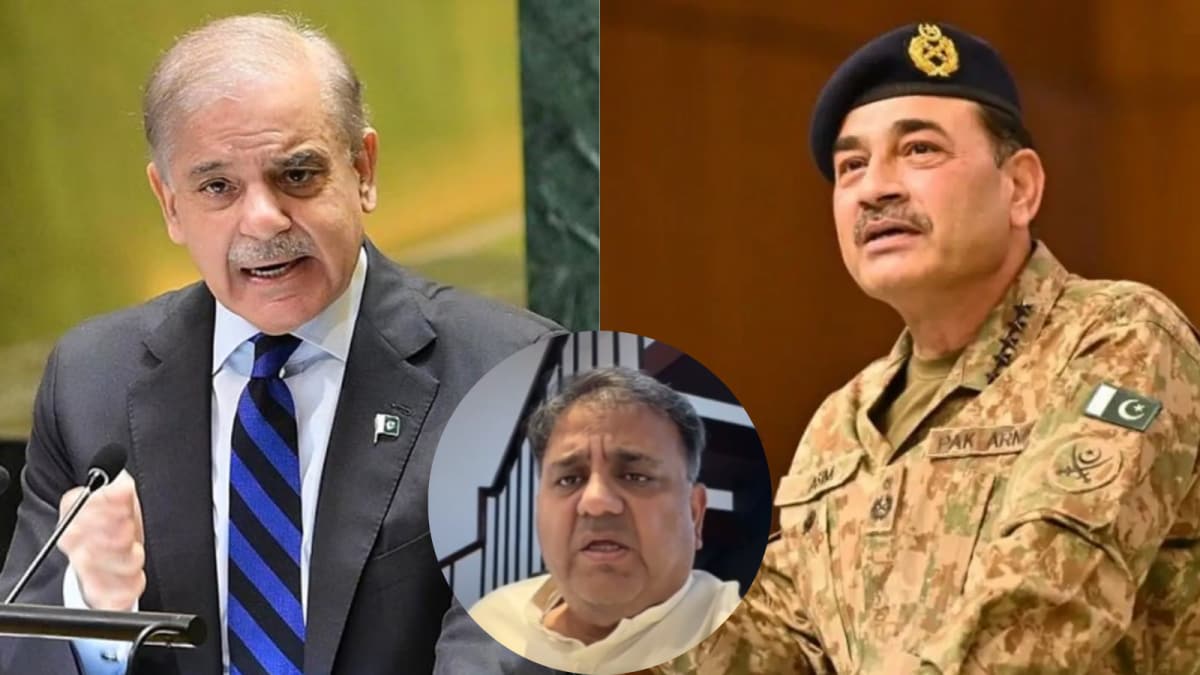
In the intricate and often opaque world of Pakistani politics, a seismic shift appears to be underway, drawing the attention of international observers and regional powers alike. Recent, candid remarks from former Information Minister Fawad Chaudhry have sent ripples through diplomatic circles, asserting unequivocally that General Asim Munir, Pakistan's Chief of Army Staff, is now the de facto leader running the nation, with even the U.S. seemingly bypassing civilian leadership to engage directly with him. This assertion gains particular weight given Munir's increasingly prominent role in sensitive diplomatic endeavors, most notably his reported involvement in hosting and managing crucial talks between the United States and Iran—a testament to his burgeoning influence on the global stage.
Chaudhry's pointed jibe, suggesting that former U.S. President Donald Trump, if still in office, would ignore Prime Minister Shehbaz Sharif in favor of Munir, underscores a perception of diminished civilian authority and an ascendant military. This narrative is not entirely new in Pakistan, a nation with a complex history of military interventions and periods of direct rule. However, the current context, marked by economic instability, political polarization, and critical geopolitical realignments, makes Munir's consolidation of power particularly noteworthy.
The General's Expanding Portfolio: Beyond National Security
Traditionally, the Pakistani Army Chief's role is confined to national defense and security. Yet, under General Munir, this portfolio has expanded dramatically, encompassing areas that would typically fall under the purview of civilian ministries. His involvement in facilitating U.S.-Iran dialogue is a prime example of this diplomatic outreach, positioning Pakistan as a crucial mediator in a highly volatile region. This role not only elevates Pakistan's international standing but also solidifies Munir's personal influence as a key interlocutor capable of navigating complex geopolitical currents.
Furthermore, reports indicate Munir's active participation in economic policy, including efforts to attract foreign investment, particularly from Gulf states. This engagement signals a broader military involvement in stabilizing the nation's faltering economy, an area where civilian governments have often struggled. While such interventions might be seen by some as necessary in times of crisis, they inevitably blur the lines between military and civilian governance, raising questions about accountability and democratic norms. The establishment of entities like the Special Investment Facilitation Council (SIFC), spearheaded by the military, further exemplifies this trend, aiming to streamline investment but also centralizing power.
Historical Echoes: Military's Enduring Shadow
Pakistan's political landscape has been consistently shaped by the powerful influence of its military establishment. From the coups of Ayub Khan and Zia-ul-Haq to Pervez Musharraf's era, the army has frequently stepped in, or been perceived to step in, when civilian governments were deemed ineffective or corrupt. This historical precedent creates a fertile ground for the current narrative of Munir's ascendancy. The military often views itself as the ultimate guardian of Pakistan's national interests, a perception that can lead to interventions in various facets of governance.
* Early Decades (1950s-1970s): Direct military rule and significant influence over policy-making. Generals like Ayub Khan and Yahya Khan held presidential powers. * Zia-ul-Haq Era (1977-1988): A prolonged period of martial law profoundly reshaped Pakistan's social and political fabric. * Post-Musharraf Era (2008-Present): While direct coups have ceased, the military's 'establishment' continues to exert considerable influence through various channels, often behind the scenes.
This enduring shadow means that even when civilian governments are in power, the military's perspective often holds significant sway, particularly on matters of foreign policy, defense, and increasingly, economic stability. The current situation with General Munir can thus be seen as a continuation, albeit in a more nuanced form, of this historical pattern.
Implications for Democracy and International Relations
General Munir's growing power has profound implications both domestically and internationally. Domestically, it raises concerns about the health of Pakistan's nascent democracy. A strong, unelected figure wielding such extensive influence can undermine democratic institutions, weaken civilian oversight, and potentially stifle political dissent. The perception of the military as the ultimate authority can also discourage genuine political reform and accountability, creating a cycle where civilian governments are seen as less capable and thus more susceptible to military influence.
Internationally, the direct engagement of foreign powers with the military chief, bypassing elected officials, sends a clear signal about who holds the real power in Islamabad. While this might offer a degree of stability and predictability for external actors seeking reliable partners, it can also complicate diplomatic relations and raise questions about the legitimacy of Pakistan's civilian government on the global stage. For instance, if the U.S. or Iran finds it more effective to negotiate with Munir, it implicitly devalues the role of Prime Minister Sharif and his cabinet.
Furthermore, the military's expanded role in economic affairs, while potentially offering short-term stability, could deter long-term foreign investment if investors perceive a lack of transparent, civilian-led governance. The institutionalization of military involvement in economic decision-making might also lead to a less competitive and more controlled economy, potentially hindering sustainable growth and innovation.
The Road Ahead: Challenges and Opportunities
General Munir's leadership presents both significant challenges and potential opportunities for Pakistan. On the one hand, his decisive action and perceived competence could bring a degree of stability to a nation grappling with multiple crises. His ability to facilitate high-stakes diplomatic talks, such as those between the U.S. and Iran, demonstrates a capacity for strategic engagement that could benefit Pakistan's foreign policy objectives.
On the other hand, the concentration of power in the hands of the military chief carries inherent risks. The long-term health of any democracy depends on robust civilian institutions, checks and balances, and the supremacy of elected representatives. A continued reliance on military leadership for political and economic solutions could stunt the growth of these vital democratic pillars.
Moving forward, the international community, particularly democratic nations, will be closely watching how this power dynamic evolves. The balance between military influence and civilian governance will be crucial in determining Pakistan's trajectory. For Pakistan itself, the challenge lies in finding a sustainable path that leverages the military's institutional strength for national security and stability, without sacrificing the principles of democratic rule and civilian supremacy. The coming months will undoubtedly test General Munir's leadership, not just in managing Pakistan's complex internal and external challenges, but also in defining the future contours of its political landscape.
Stay Informed
Get the world's most important stories delivered to your inbox.
No spam, unsubscribe anytime.
Comments
No comments yet. Be the first to share your thoughts!