Pope Leo XIV Draws Record Crowds in Douala, Cameroon, Amplifying Message of Peace in Africa
Pope Leo XIV's historic visit to Douala, Cameroon, culminated in an open-air Mass attended by over 120,000 faithful, marking the largest gathering of his 11-day African tour. The Pontiff's message of peace and reconciliation resonated deeply in a region grappling with complex socio-political challenges. This pivotal moment underscores the Catholic Church's enduring influence and commitment to fostering hope and stability across the continent, setting a powerful precedent for his upcoming stop in Angola.
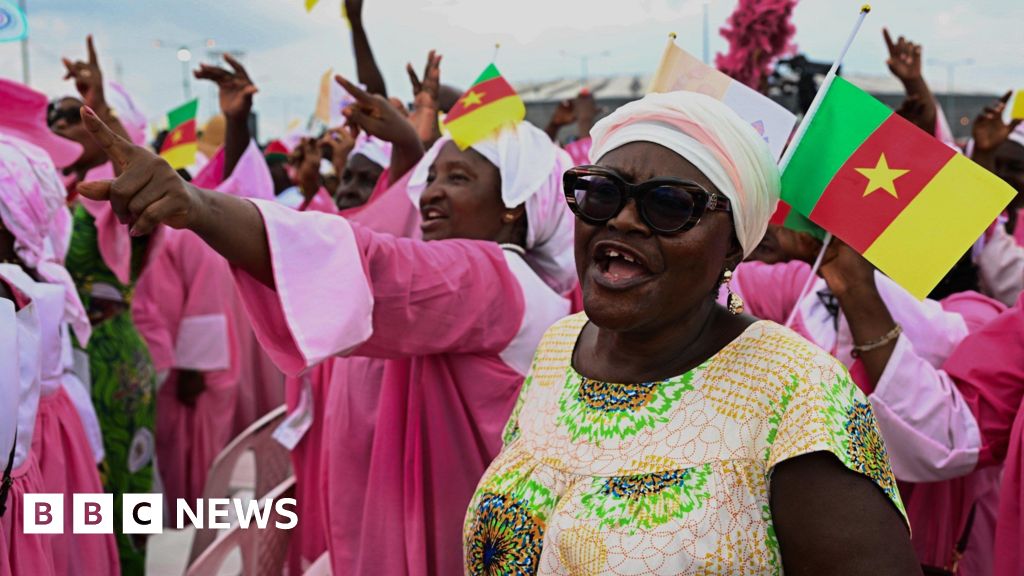
In a display of unwavering faith and profound spiritual connection, Pope Leo XIV captivated the hearts of over 120,000 faithful in Douala, Cameroon, during a monumental open-air Mass. This extraordinary gathering, held on Friday, marked the largest crowd witnessed so far during his extensive 11-day African apostolic tour, a testament to the enduring power of his message and the deep spiritual yearning of the continent's people. As the Pontiff arrived in Cameroon's bustling economic hub, his presence ignited a fervent wave of hope and solidarity, reiterating his consistent call for peace, reconciliation, and social justice.
A Continent in Dialogue: The Significance of the African Tour
Pope Leo XIV's current journey across Africa is far more than a series of ceremonial visits; it is a meticulously planned diplomatic and spiritual endeavor aimed at strengthening the Catholic Church's presence and addressing pressing regional issues. His itinerary, which includes Cameroon and will soon extend to Angola, reflects a strategic focus on nations grappling with a spectrum of challenges, from internal conflicts and economic disparities to climate change impacts and the persistent struggle for democratic governance. The choice of Douala, a vibrant port city and Cameroon's economic powerhouse, for such a significant event, underscores the Vatican's recognition of urban centers as crucibles of both opportunity and social tension. The sheer scale of the attendance in Douala—a figure that surpasses previous stops and highlights the fervent devotion of the Cameroonian faithful—sends a powerful message about the Church's relevance and capacity to mobilize communities in Africa.
Historically, papal visits to Africa have often been pivotal moments, offering moral guidance and a global spotlight on local issues. From Pope John Paul II's numerous journeys, which often championed human rights and interfaith dialogue, to Pope Benedict XVI's calls for peace and justice, the papacy has consistently engaged with the continent's complexities. Pope Leo XIV's approach builds on this legacy, emphasizing synodality and the importance of listening to local churches. His messages are carefully crafted to resonate with the specific contexts of each nation, often incorporating local languages and customs, thereby fostering a deeper sense of belonging and shared purpose among the faithful.
Douala's Embrace: A City's Hopes and Challenges
Douala, with its dynamic economy and diverse population, serves as a microcosm of Cameroon's broader aspirations and struggles. The city is a melting pot of cultures and religions, but also faces challenges common to rapidly urbanizing African centers: unemployment, inequality, and the strain on public services. The Pope's decision to hold a Mass of such magnitude here was a deliberate act of solidarity, offering spiritual solace and a renewed sense of community. His homily, delivered under the African sun, reportedly touched upon themes pertinent to the local context, including the importance of family values, youth empowerment, and ethical leadership. These themes are particularly resonant in a country where a significant portion of the population is under 30 and where issues of governance and corruption frequently dominate public discourse.
The logistical undertaking of hosting over 120,000 people for an open-air Mass is immense, requiring meticulous planning by local authorities and the Church. The success of the event speaks volumes about the collaborative spirit and the deep desire of the Cameroonian people to participate in such a historic occasion. Eyewitness accounts describe an atmosphere of profound reverence mixed with joyful celebration, with hymns filling the air and vibrant traditional attire adding to the spectacle. For many attendees, this was a once-in-a-lifetime opportunity to see the Pontiff and receive his blessing, an experience that transcends mere religious observance and becomes a powerful cultural memory.
The Papal Message: A Call for Unity and Healing
At the core of Pope Leo XIV's address in Douala, as throughout his tour, was a powerful plea for peace and reconciliation. Cameroon, like many nations in the region, has experienced periods of internal strife and ethnic tensions. The Pope's consistent emphasis on dialogue, forgiveness, and mutual understanding is therefore not merely abstract theology but a direct and urgent appeal for practical solutions to real-world conflicts. He has often spoken about the need to build bridges rather than walls, and to recognize the inherent dignity of every human being, regardless of their background or beliefs. This message is particularly salient in a continent where religious and ethnic diversity can sometimes be exploited for political gain, leading to division and violence.
His reiteration of peace comes after earlier engagements during his visit, where he likely met with political leaders, civil society representatives, and victims of conflict. Such meetings are crucial for the Pope to gain a firsthand understanding of the local situation and for local stakeholders to hear the Church's commitment to their well-being. The Vatican's diplomatic efforts often work quietly behind the scenes, complementing the public pronouncements of the Pontiff. The impact of these messages extends beyond the Catholic community, often influencing broader societal discourse and encouraging interfaith cooperation for peace initiatives.
Looking Ahead: Angola and Beyond
As Pope Leo XIV prepares to depart Cameroon for Angola, the momentum generated by the Douala Mass is expected to carry forward. His visit to Angola will undoubtedly focus on similar themes, adapted to the specific historical and contemporary context of that nation, which has its own complex history of civil war and reconstruction. The Pope's African tour is a strategic investment in the continent's future, recognizing its rapidly growing Catholic population and its increasing geopolitical importance.
The long-term implications of such a visit are manifold. It reinforces the faith of millions, inspires local clergy and religious workers, and provides a moral compass for leaders. More broadly, it elevates Africa's concerns onto the global stage, urging international attention and solidarity for a continent that often feels marginalized. The images of tens of thousands united in prayer under the leadership of Pope Leo XIV are not just powerful religious symbols; they are potent reminders of humanity's shared aspirations for peace, dignity, and a better future. The Pope's journey continues to weave a narrative of hope, resilience, and the enduring power of faith in the face of adversity, leaving an indelible mark on the hearts and minds of the African people and the global Catholic community.
Stay Informed
Get the world's most important stories delivered to your inbox.
No spam, unsubscribe anytime.
Comments
No comments yet. Be the first to share your thoughts!