Submarine Volcano Erupts in Central Bismarck Sea, Unleashing Hydrothermal Plumes and Pumice
A submarine volcano in the Central Bismarck Sea, near Papua New Guinea's Admiralty Islands, has entered a new eruptive phase, spewing steam-laden plumes up to 19,000 feet and releasing vast amounts of floating pumice. This hydrothermal eruption, observed on May 19, 2026, highlights the dynamic geological activity in the Pacific Ring of Fire. Experts are monitoring the situation closely for potential impacts on marine life and regional navigation.
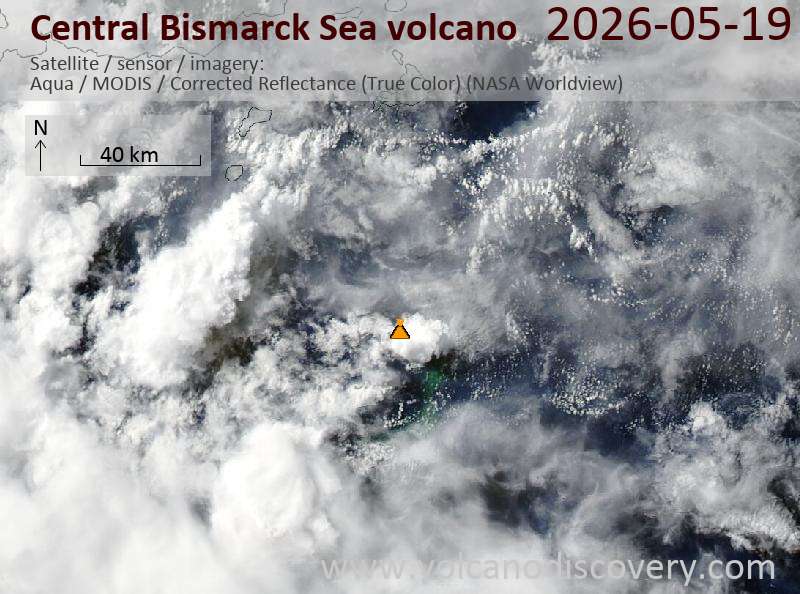
The tranquil waters of the Central Bismarck Sea, a region typically known for its rich biodiversity and remote beauty, have been dramatically disturbed by a powerful new eruptive phase from a submarine volcano. On Tuesday, May 19, 2026, at approximately 15:40 UTC, observers noted significant activity, with steam-laden plumes soaring to an estimated altitude of 19,000 feet (FL190). This event, originating from a volcano near the Admiralty Islands of Papua New Guinea, has not only sent a visible column into the sky but has also unleashed a substantial amount of floating pumice across the ocean surface, signaling a significant hydrothermal eruption. The incident underscores the relentless geological forces at play beneath the Pacific, reminding us of the planet's dynamic and often unpredictable nature.
The Anatomy of a Submarine Eruption
Unlike their terrestrial counterparts, submarine volcanic eruptions often go unnoticed unless they are particularly powerful or shallow enough to breach the surface. The Central Bismarck Sea volcano, however, has made its presence known through distinct signs. The primary indicators of this eruption are the steam-laden plumes and the large amount of floating pumice. Steam plumes are a common feature of hydrothermal eruptions, occurring when superheated water interacts with magma or hot rocks, flashing into steam. The sheer volume of the plume reaching FL190 suggests a considerable release of energy and material from the seafloor. Floating pumice, a highly vesicular, lightweight volcanic rock, is another tell-tale sign. Its presence on the surface indicates that volcanic material has been ejected and, due to its buoyancy, has risen through the water column. This phenomenon can pose hazards to marine navigation, as pumice rafts can be extensive and difficult to detect, potentially damaging vessel hulls or fouling engines. Historically, massive pumice rafts have been known to travel thousands of kilometers, altering marine ecosystems and even creating temporary 'islands' for colonizing species.
Geopolitical Significance and the Ring of Fire
The Central Bismarck Sea lies squarely within the infamous Pacific Ring of Fire, a horseshoe-shaped belt stretching over 40,000 kilometers and home to approximately 75% of the world's active and dormant volcanoes. This region is characterized by intense seismic and volcanic activity due to the movement and collision of several tectonic plates, including the Pacific Plate, Australian Plate, and Eurasian Plate. Papua New Guinea, a nation of diverse cultures and rugged landscapes, is particularly susceptible to these geological forces, with numerous active volcanoes both on land and beneath the sea. The recent eruption serves as a stark reminder of the constant geological flux in this part of the world. For the local communities in the Admiralty Islands, while direct immediate danger might be minimal due to the submarine nature of the eruption, potential long-term impacts on fishing grounds and marine resources are a concern. The region's economy heavily relies on its rich marine ecosystems, and any significant alteration could have ripple effects on livelihoods.
Monitoring and Environmental Impact
Volcanic ash advisories, such as the one issued for this event (EMISSION TO FL190 OBS AT 19/1540Z EST VA DTG: 19/1540Z), are crucial for air traffic control, as volcanic ash can severely damage aircraft engines. While the plume is primarily steam-laden, the presence of fine ash particles cannot be ruled out, necessitating vigilance from aviation authorities. Beyond aviation, the environmental implications of such an eruption are multifaceted:
* Marine Life Disruption: The sudden release of heat, chemicals, and particulate matter can drastically alter local ocean chemistry, potentially harming sensitive marine ecosystems. While some deep-sea organisms are adapted to hydrothermal vents, a rapid, large-scale event can overwhelm them. * Ocean Acidification: Volcanic gases, including carbon dioxide, can dissolve in seawater, contributing to localized ocean acidification, which is detrimental to shell-forming organisms like corals and mollusks. * Nutrient Release: Conversely, volcanic activity can also release beneficial nutrients, stimulating localized phytoplankton blooms, which form the base of the marine food web. However, the balance is delicate. * Pumice Rafts: These rafts can transport marine organisms, acting as temporary habitats, but they can also scour coastlines and introduce invasive species if they drift to new areas.
Scientists from various geological and oceanographic institutions are undoubtedly monitoring this event using satellite imagery, seismic sensors, and potentially autonomous underwater vehicles (AUVs) to better understand the eruption's dynamics and its broader impact. The data collected from such events is invaluable for improving our understanding of submarine volcanism, a field that remains relatively underexplored compared to terrestrial volcanology.
Looking Ahead: A Dynamic Earth
The eruption of the Central Bismarck Sea volcano is more than just a geological event; it is a powerful illustration of Earth's ongoing evolution. For residents of Papua New Guinea and the broader Pacific, it is a reminder of the inherent risks and unique beauty of living in one of the planet's most geologically active regions. While immediate threats appear contained, the long-term monitoring of the pumice rafts and potential changes in marine environments will be crucial. This event serves as a call to enhance our understanding of these deep-sea phenomena, which, despite their hidden nature, play a significant role in shaping our planet's oceans and atmosphere. As technology advances, so too does our ability to observe and interpret these majestic, subterranean spectacles, allowing us to better prepare for and adapt to a world constantly in flux. The Central Bismarck Sea continues to be a hotbed of activity, a testament to the powerful forces that sculpt our world.
Stay Informed
Get the world's most important stories delivered to your inbox.
No spam, unsubscribe anytime.
Comments
No comments yet. Be the first to share your thoughts!