Trump Declares 'Epic Fury' Success: Iran Nuclear Deal Claims Spark Global Debate
Following 'Operation Epic Fury,' former President Donald Trump announced significant breakthroughs in the US military mission against Iran, claiming a suspension of Tehran's nuclear program. These assertions, however, have been met with skepticism and outright denial from Iranian officials and international observers. The claims of a 'nuclear dust' deal, reportedly involving $20 billion, have been vehemently rejected by Trump, raising questions about the true nature of any negotiations or outcomes.
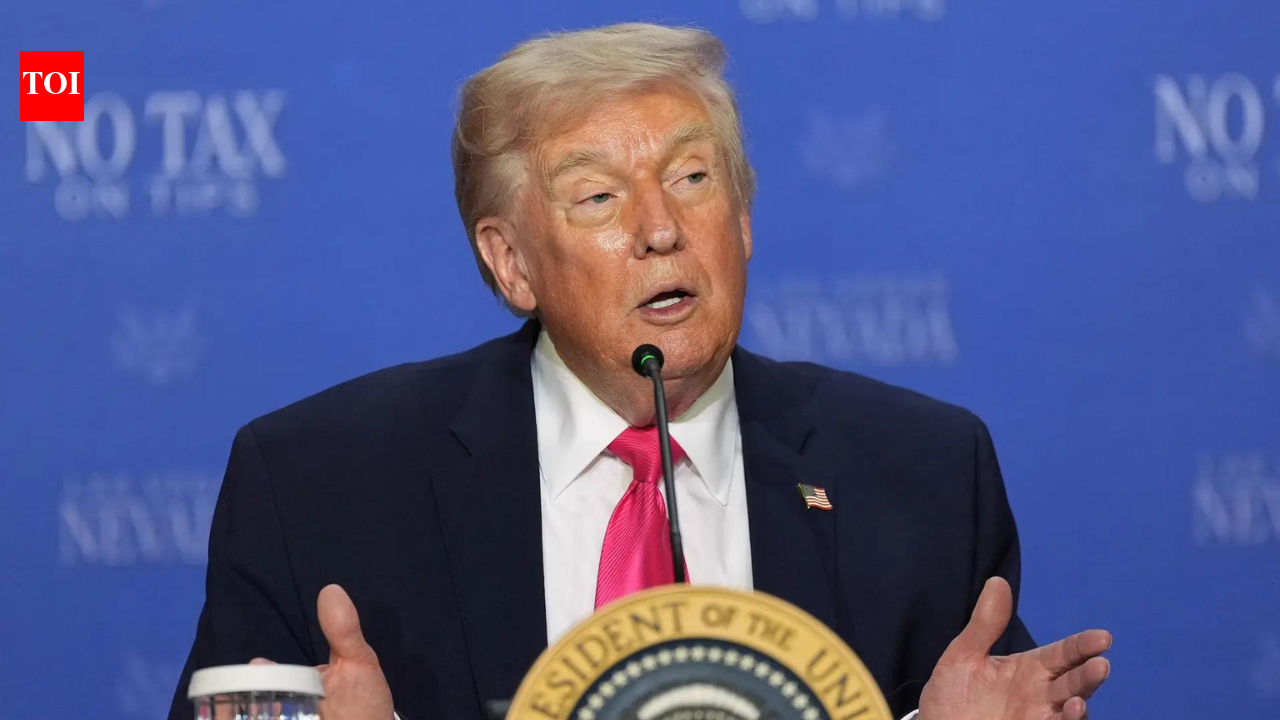
In a dramatic declaration that has sent ripples across the geopolitical landscape, former US President Donald Trump recently claimed unprecedented success in the US military's 'Operation Epic Fury' against Iran. After more than a month of intense operations, Trump announced what he described as the suspension of Tehran’s nuclear programme, a development that, if true, would represent a monumental shift in a long-standing and volatile international standoff. However, these claims have been immediately met with a storm of controversy, denials from Iranian authorities, and a chorus of skepticism from international analysts, leaving the world to decipher the true state of affairs.
Trump’s pronouncements came amidst swirling rumors of a clandestine deal, specifically a purported '$20 billion nuclear dust deal' that would see significant financial transactions in exchange for Iran curtailing its atomic ambitions. The former President, however, vehemently rejected any notion of money changing hands, stating unequivocally, 'No money is changing hands.' This denial, while firm, only deepened the mystery surrounding the alleged breakthroughs and the nature of any engagement between Washington and Tehran.
The implications of such a development are profound, potentially reshaping the balance of power in the Middle East and redefining global non-proliferation efforts. Yet, the lack of concrete evidence and the conflicting narratives from key players underscore the complex and often opaque nature of international diplomacy, particularly when dealing with nations as entrenched in their positions as the United States and Iran.
The Unfolding Narrative: Claims and Counter-Claims
Trump's announcement was delivered with his characteristic flair, portraying a decisive victory for American foreign policy and military might. He suggested that the month-long 'Operation Epic Fury' had yielded results far beyond initial expectations, forcing Iran to capitulate on its nuclear aspirations. This narrative aligns with his administration's previous 'maximum pressure' campaign, which aimed to cripple Iran's economy and compel it to negotiate a new nuclear agreement, replacing the 2015 Joint Comprehensive Plan of Action (JCPOA) from which the US withdrew in 2018.
However, Iranian officials were quick to dismiss Trump's assertions as baseless propaganda. Foreign Minister Javad Zarif, in a series of tweets, categorically denied any agreement to suspend the nuclear program or any financial dealings. He reiterated Iran's stance that its nuclear activities are purely for peaceful purposes and subject to international safeguards, albeit with reduced compliance following the US withdrawal from the JCPOA and subsequent sanctions. The conflicting statements create a significant credibility gap, leaving observers to question the veracity of either side's claims.
International Atomic Energy Agency (IAEA) inspectors, who monitor Iran's nuclear facilities, have yet to issue any official reports corroborating Trump's claims of a suspension. Their silence, or lack of immediate confirmation, further fuels doubts about the existence of such a breakthrough. The international community, including European signatories to the JCPOA, has called for transparency and verification, emphasizing that any genuine progress on Iran's nuclear file must be verifiable and subject to robust international oversight.
A History of Tensions: The US-Iran Standoff
The relationship between the United States and Iran has been fraught with tension for decades, marked by periods of overt conflict and covert operations. The 1979 Iranian Revolution and the subsequent hostage crisis fundamentally altered the dynamic, leading to a prolonged era of animosity. Iran's pursuit of a nuclear program, which it maintains is for energy and medical research, has been a central point of contention, with Western powers fearing its potential for weaponization.
* 2002: Revelation of Iran's clandestine uranium enrichment facilities at Natanz and Arak sparks international alarm. * 2006-2010: UN Security Council imposes multiple rounds of sanctions on Iran over its nuclear activities. * 2015: The JCPOA is signed between Iran and the P5+1 (China, France, Germany, Russia, United Kingdom, United States, plus the European Union), offering sanctions relief in exchange for verifiable limits on Iran's nuclear program. * 2018: Trump administration withdraws from the JCPOA, reimposing and escalating sanctions, leading to Iran gradually reducing its commitments under the deal. * 2019-2020: Increased military confrontations, including attacks on oil tankers, drone shoot-downs, and the assassination of Iranian General Qassem Soleimani, escalate tensions to dangerous levels.
'Operation Epic Fury' itself remains largely shrouded in mystery, with limited details released to the public. While Trump alluded to military actions, the specific nature and scope of these operations, and how they purportedly led to a nuclear program suspension, are unclear. This opacity contributes to the skepticism surrounding the claims, as previous military engagements have rarely resulted in such immediate and comprehensive policy shifts from Iran.
Expert Analysis and Geopolitical Implications
Experts in international relations and nuclear proliferation are largely cautious, if not outright dismissive, of Trump's claims without concrete evidence. Dr. Anya Sharma, a senior fellow at the Global Security Institute, commented, "While any de-escalation of Iran's nuclear ambitions would be welcome, the lack of independent verification and the categorical denials from Tehran make these claims highly suspect. It's more likely a rhetorical flourish designed for domestic consumption or an attempt to frame a minor concession as a major victory." She added that the idea of a '$20 billion nuclear dust deal' without money changing hands is a contradiction in terms, suggesting either a misunderstanding or a deliberate misrepresentation of any potential arrangements.
If, by some remote chance, Iran has indeed suspended its nuclear program, the geopolitical ramifications would be immense. It could: * Reduce regional instability: Lessening the immediate threat of a nuclear-armed Iran would calm fears among Gulf states and Israel. * Pave the way for renewed diplomacy: A verifiable suspension could open doors for broader negotiations on Iran's ballistic missile program and regional proxy activities. * Impact global energy markets: A de-escalation could potentially lead to increased Iranian oil exports, affecting global prices.
However, the more probable scenario, according to most analysts, is that Trump's statements are either an exaggeration of minor diplomatic overtures, a misinterpretation of Iranian actions, or a strategic communication tactic. Iran has consistently demonstrated a resolve to resist external pressure, often escalating its nuclear activities in response to sanctions rather than capitulating. The notion of a sudden, unverified suspension runs counter to its established patterns of behavior.
The Path Forward: Verification and Transparency
The international community's immediate priority will be to seek clarity and independent verification of Iran's nuclear activities. The IAEA's role becomes paramount in this context. Any genuine suspension or rollback of Iran's nuclear program must be: * Verifiable: Subject to rigorous inspections and monitoring by international bodies. * Transparent: Publicly acknowledged and detailed by all parties involved. * Sustainable: Part of a broader, enduring agreement that addresses the root causes of the nuclear standoff.
Without such verification, Trump's claims will likely remain in the realm of political rhetoric, further complicating an already intricate and sensitive issue. The episode underscores the critical need for clear, consistent, and evidence-based communication in international diplomacy, especially concerning matters of nuclear proliferation. As the world watches, the truth behind 'Operation Epic Fury' and its alleged nuclear breakthroughs remains elusive, reminding us that in the high-stakes game of international politics, appearances can often be deceiving, and skepticism is a necessary virtue. The coming weeks will undoubtedly reveal more, as diplomats and intelligence agencies work to separate fact from fiction in this latest chapter of the US-Iran saga.
Stay Informed
Get the world's most important stories delivered to your inbox.
No spam, unsubscribe anytime.
Comments
No comments yet. Be the first to share your thoughts!