Trump's Iran Gambit: Is a Nuclear Deal Revival on the Horizon?
Former US President Donald Trump has indicated a belief that Iran is interested in reaching a new agreement, despite ongoing tensions and stalled nuclear negotiations. This unexpected assertion comes amidst a complex geopolitical landscape, raising questions about the future of the 2015 nuclear deal and regional stability. Experts weigh in on the feasibility and implications of such a development, examining the intricate dance between diplomacy and pressure.
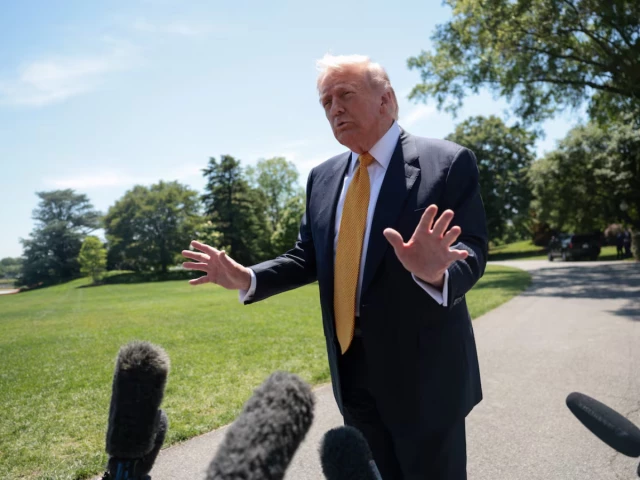
In a surprising turn that has sent ripples through diplomatic circles, former US President Donald Trump recently asserted that Iran has an "interest in reaching an agreement" regarding its contentious nuclear program and the broader regional conflict. This statement, made during a telephone interview with a French broadcaster, injects a new layer of speculation into the already complex and volatile relationship between Washington and Tehran. Coming from a figure who unilaterally withdrew the U.S. from the Joint Comprehensive Plan of Action (JCPOA) in 2018, Trump's remarks suggest a potential shift in the narrative, or at least a strategic observation, that warrants closer examination.
The assertion arrives at a critical juncture. The Biden administration has, to date, struggled to fully revive the JCPOA, facing intransigence from both sides and a rapidly advancing Iranian nuclear program. Meanwhile, regional tensions remain acutely high, exacerbated by proxy conflicts and maritime incidents. Trump's comments, therefore, beg the question: Is there a genuine opening for a diplomatic breakthrough, or is this merely political posturing designed to influence future policy discussions or even an upcoming presidential campaign?
The Lingering Shadow of the JCPOA
To understand the gravity of Trump's statement, one must revisit the tumultuous history of the Iran nuclear deal. Signed in 2015 by Iran and the P5+1 powers (China, France, Germany, Russia, the United Kingdom, and the United States), the JCPOA was hailed as a landmark achievement in non-proliferation. It offered Iran sanctions relief in exchange for severe restrictions on its nuclear activities, aimed at preventing it from developing nuclear weapons. For a brief period, it seemed to offer a pathway to de-escalation and integration for Iran into the global community.
However, in May 2018, President Trump withdrew the U.S. from the agreement, labeling it "the worst deal ever" and reimposing crippling sanctions under a "maximum pressure" campaign. This move was met with international condemnation and, predictably, led Iran to gradually roll back its commitments under the deal, accelerating its uranium enrichment and research activities. The withdrawal not only shattered the fragile trust built over years of negotiation but also plunged the region into a new era of uncertainty and confrontation. The subsequent years saw a series of escalations, including attacks on oil tankers, drone strikes, and the assassination of Iranian General Qasem Soleimani.
Since then, efforts by the Biden administration to resurrect the deal have been fraught with difficulty. Indirect talks in Vienna have repeatedly stalled, with both sides demanding concessions from the other before fully re-engaging. Iran has consistently called for the complete lifting of all sanctions imposed by the Trump administration and guarantees that a future U.S. president would not again unilaterally abandon the agreement. The U.S., conversely, has sought assurances that Iran would return to full compliance with its nuclear obligations and address its ballistic missile program and regional behavior.
Unpacking Trump's Rationale
What might be behind Trump's current assessment? Several theories emerge. Firstly, it could be a reflection of intelligence or back-channel communications that are not publicly known. Given the clandestine nature of some diplomatic efforts, it's plausible that intermediaries have conveyed messages suggesting Iranian flexibility, perhaps driven by the severe economic strain caused by sanctions and internal dissent. Iran's economy has been hit hard, with inflation soaring and the value of its currency plummeting, leading to widespread protests and social unrest.
Secondly, Trump's statement could be a strategic play. As a potential presidential candidate for 2024, he might be positioning himself as a dealmaker, contrasting with the current administration's perceived diplomatic stagnation. By suggesting Iran is ready to negotiate, he could be subtly criticizing Biden's approach and hinting that he, Trump, possesses the unique ability to forge an agreement. This aligns with his past rhetoric of being able to achieve what others cannot.
Thirdly, it might simply be an observation based on Iran's historical pattern of engaging in diplomacy when under significant pressure. While Tehran often projects an image of defiance, its leadership has, at times, shown pragmatism when faced with existential threats or severe economic hardship. The recent overtures between Iran and Saudi Arabia, brokered by China, also demonstrate a willingness to engage in dialogue, albeit on regional issues rather than nuclear ones.
Implications for Regional Stability and Global Diplomacy
The notion of Iran being open to a deal, particularly one potentially involving the architect of the JCPOA's demise, carries profound implications. For regional stability, a renewed diplomatic effort could offer a much-needed off-ramp from the current trajectory of escalation. Countries like Israel and Saudi Arabia, deeply concerned by Iran's nuclear ambitions and regional influence, would be watching closely. Any new agreement would need to address their security concerns more robustly than the original JCPOA, which they criticized for not adequately curbing Iran's ballistic missile program or its support for proxy groups.
Globally, a successful negotiation could revitalize the non-proliferation regime, which has been weakened by the JCPOA's unraveling. It would also test the limits of international cooperation, particularly given the strained relations between the U.S. and some of the other P5+1 members. The role of European powers, who have consistently advocated for the JCPOA's preservation, would be crucial in facilitating any new dialogue.
However, significant hurdles remain. The trust deficit between Washington and Tehran is immense. Iran's current nuclear advancements, including enrichment levels close to weapons-grade purity, mean that any new deal would likely require more stringent verification mechanisms and potentially a longer sunset clause than the original agreement. Furthermore, the domestic political landscapes in both the U.S. and Iran are highly polarized, making concessions difficult for either leadership to sell to their respective hardliners.
The Path Forward: Diplomacy or Deterrence?
Trump's comments, while intriguing, do not guarantee a breakthrough. The path to any new agreement with Iran is fraught with challenges, requiring immense diplomatic skill, patience, and a willingness from all parties to compromise. The international community, including the International Atomic Energy Agency (IAEA), continues to monitor Iran's nuclear activities with growing concern, emphasizing the urgency of a diplomatic resolution.
Ultimately, whether Iran genuinely seeks a deal or if Trump's statement is merely a strategic gambit, the underlying reality remains: the Iranian nuclear issue is a ticking clock. The choice between a renewed diplomatic framework and continued escalation will define the future of regional security and global non-proliferation efforts. The world watches, hoping that the seeds of a potential agreement, however unlikely they may seem, can blossom into a lasting peace.
Stay Informed
Get the world's most important stories delivered to your inbox.
No spam, unsubscribe anytime.
Comments
No comments yet. Be the first to share your thoughts!