Australia Fortifies Pacific Alliances: A New Era of Regional Security Cooperation
Australia is signaling a significant shift in its defense posture, emphasizing increased military cooperation and readiness with key allies like the US, Japan, and Indonesia. This move, underscored by recent joint exercises in the South China Sea, reflects a growing commitment to regional stability and a proactive approach to evolving geopolitical dynamics. As Canberra deepens its strategic partnerships, the Indo-Pacific braces for a more integrated defense landscape.
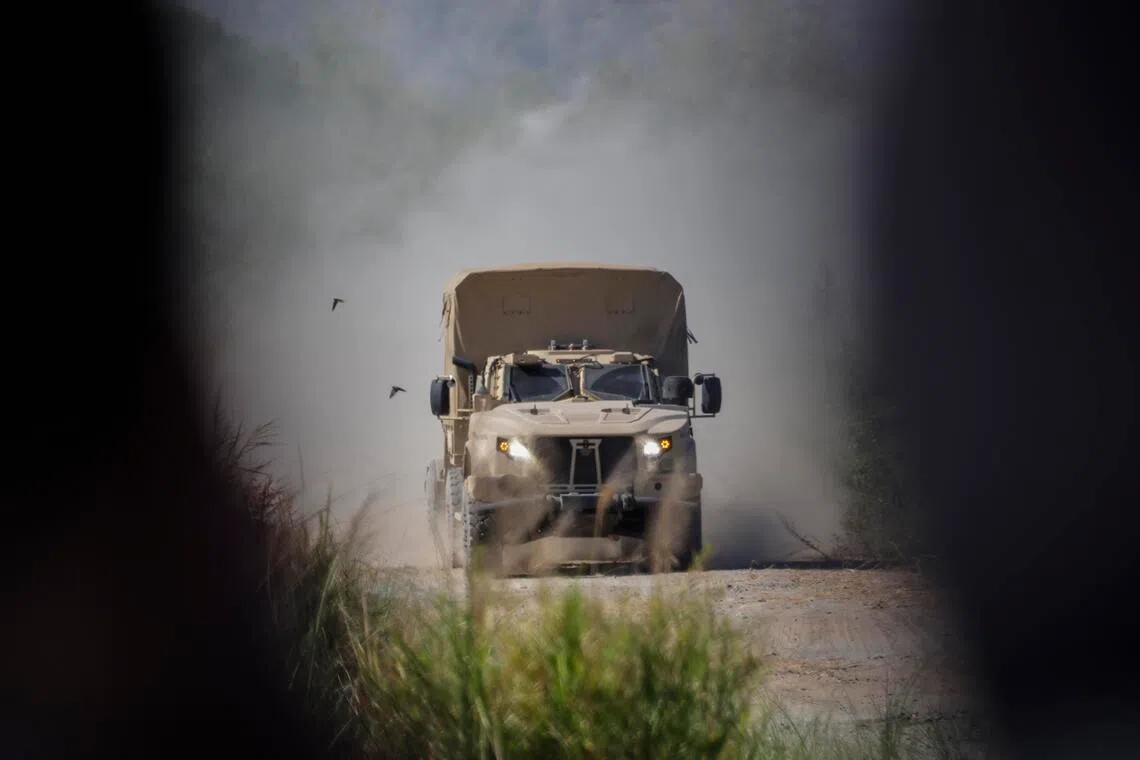
In a bold declaration that reverberated across the Indo-Pacific, Australia's defence forces chief, General Angus Campbell, affirmed the nation's readiness to deploy alongside its allies “if needed in Asia or beyond.” This statement, made on May 8 following extensive military drills in the South China Sea involving the US, Philippines, and other partners, marks a pivotal moment in Australia's evolving strategic outlook. It signals a determined pivot towards deeper, more integrated military cooperation, aimed at bolstering regional security amidst an increasingly complex geopolitical environment.
The exercises, which concluded with Campbell's pronouncement, are not isolated incidents but rather part of a broader, concerted effort by Canberra to enhance its interoperability and collective defence capabilities. The explicit mention of increased military activities, including training with Japan and Indonesia, underscores a multi-faceted approach to security that extends beyond traditional alliances. This strategic recalibration is driven by a confluence of factors, including rising tensions in the South China Sea, the growing assertiveness of certain regional powers, and the imperative to safeguard vital trade routes and international norms.
The Shifting Sands of Indo-Pacific Security
The Indo-Pacific region, a vast expanse stretching from the Indian Ocean to the Pacific, has emerged as the epicentre of global strategic competition. Its economic dynamism is matched only by its intricate web of geopolitical rivalries and security challenges. For decades, Australia has maintained a robust alliance with the United States, forming the bedrock of its defence policy. However, the contemporary security landscape demands a more diversified and distributed approach. The rise of China as a military and economic powerhouse, coupled with unresolved territorial disputes and the potential for flashpoints like Taiwan, has compelled nations like Australia to re-evaluate their strategic calculus.
Australia’s commitment to increased military activities with Japan and Indonesia is particularly noteworthy. Japan, a key US ally and a significant economic power, shares Australia’s concerns about regional stability and the sanctity of international law. Enhanced military cooperation, including joint exercises and intelligence sharing, strengthens a crucial democratic axis in the region. Similarly, Indonesia, the world’s largest archipelago nation and a pivotal member of ASEAN, holds immense strategic importance. Deepening defence ties with Jakarta not only bolsters bilateral relations but also contributes to the collective security framework of Southeast Asia, a region vital to Australia’s economic and strategic interests.
Beyond Traditional Alliances: A Networked Approach
The concept of “networked security” is at the heart of Australia’s current strategy. While the ANZUS treaty with the United States remains paramount, Canberra is actively cultivating a web of bilateral and multilateral partnerships that enhance its strategic depth and flexibility. This includes the Quad (Quadrilateral Security Dialogue) with the US, Japan, and India, which focuses on maritime security, disaster relief, and infrastructure development, as well as AUKUS, a trilateral security pact with the US and UK centered on advanced defence capabilities, notably nuclear-powered submarines.
These initiatives are not merely about acquiring advanced military hardware; they are about fostering trust, building common operational pictures, and ensuring seamless coordination in times of crisis. The recent exercises in the South China Sea, involving not just the US and Philippines but also other regional partners, exemplify this networked approach. They serve as a powerful deterrent, demonstrating the collective resolve of like-minded nations to uphold a rules-based international order and freedom of navigation in critical waterways. The ability to conduct complex, multi-national drills across vast distances is a testament to the growing interoperability among these forces.
Economic Implications and Regional Stability
The stability of the Indo-Pacific is inextricably linked to global economic prosperity. The South China Sea, for instance, is a critical artery for international trade, with trillions of dollars in goods passing through its waters annually. Any disruption to this flow, whether due to conflict or coercion, would have catastrophic consequences for the global economy, including Australia’s own trade-dependent economy. Therefore, Australia’s proactive stance is not just a matter of military strategy but also an economic imperative.
By strengthening its defence partnerships and projecting a credible deterrent, Australia aims to safeguard these vital maritime commons and ensure that disputes are resolved peacefully and in accordance with international law. This contributes to a more predictable and stable regional environment, which in turn fosters economic growth and investment. The message is clear: Australia and its allies are committed to upholding the principles of open navigation and sovereignty, and they possess the collective capability to act if these principles are challenged. The economic ramifications of instability are too great to ignore, making security cooperation a foundational pillar for sustained prosperity.
The Path Forward: Challenges and Opportunities
While Australia’s enhanced defence posture and deepened alliances offer significant advantages, they also present challenges. Maintaining a delicate balance between deterrence and de-escalation, managing complex relationships with diverse partners, and investing in the necessary capabilities all require sustained political will and substantial resources. Furthermore, effective regional security cannot be achieved through military means alone; it must be complemented by robust diplomacy, economic cooperation, and cultural exchange.
Looking ahead, Australia is poised to play an even more prominent role in shaping the security architecture of the Indo-Pacific. Its commitment to working with allies, from established partners like the US and Japan to emerging collaborators like Indonesia, signals a mature and adaptive foreign policy. The focus will remain on building resilience, fostering interoperability, and promoting a shared vision of a peaceful, prosperous, and secure region. As the world watches the Indo-Pacific, Australia's strategic choices will undoubtedly have far-reaching implications, not just for its own future but for the stability of the global order. The readiness expressed by General Campbell is more than a statement of intent; it is a blueprint for collective action in an era defined by uncertainty and opportunity.
Stay Informed
Get the world's most important stories delivered to your inbox.
No spam, unsubscribe anytime.
Comments
No comments yet. Be the first to share your thoughts!